

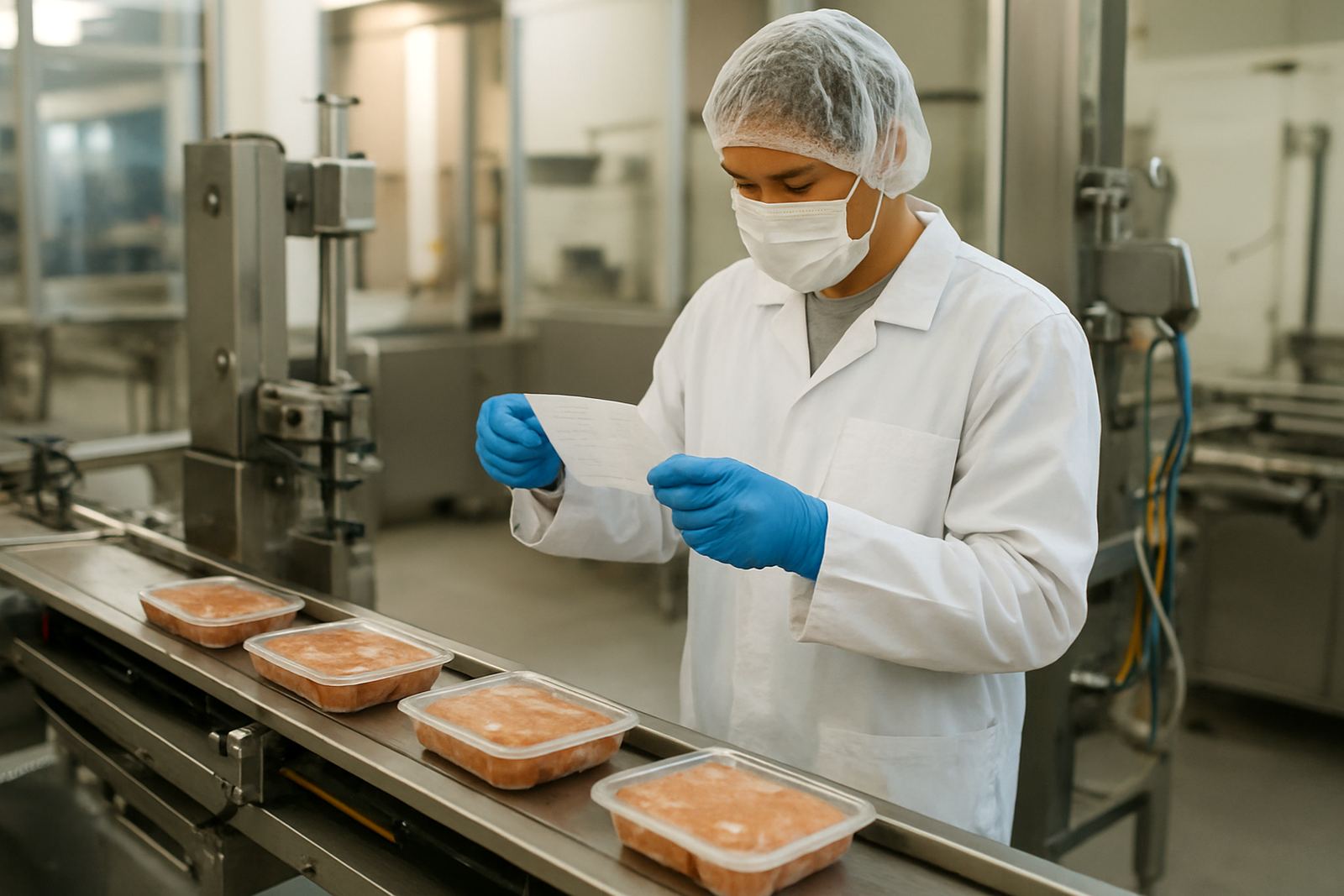


The Brief From A Busy Food Packhouse
The client was a medium-sized food producer based in Stellenbosch, supplying packaged goods through retail, foodservice and regional wholesale channels. Their team needed better control over ingredients, work in progress and finished goods, plus a clearer link between production batches and warehouse movement.
Before the project, information sat across more than one system and too much of the process relied on manual handovers. That made it harder to reconcile stock after production runs, and it slowed down decisions when a batch needed to be tracked back through receiving, processing and dispatch. The brief was simple in principle: put one operating picture in place and keep it usable for staff on the floor, not just management.
- Site type: packaged food production and warehousing
- Location: Stellenbosch, Western Cape
- Main need: batch traceability from receipt to dispatch
- Secondary need: cleaner warehouse setup and stock control
Constraints We Had To Work Around
The operation could not stop for a long system project, so the rollout had to fit around production shifts, loading times and dispatch cut-offs. Like many food sites in the Western Cape, the business also had to plan around load-shedding, internet interruptions and the limits of manual stock checking when orders are going out at the same time as production is running.
Another constraint was the layout of the warehouse. Pallet space was tight, some stock moved in cartons and some in bulk, and the team needed a practical location structure that could be used without adding extra steps to every receipt or pick. We also had to keep the setup aligned to food safety and audit expectations, so the stock records needed to be neat, dated and easy to pull when an inspector or customer asked for proof.
- Work had to happen without a full shutdown
- Warehouse space was limited and had mixed unit handling
- Traceability records had to support audit requests
- Users needed a simple process that could be learned quickly
What We Set Up In The ERP Flow
We mapped the client’s core movement from goods receiving through to production consumption, packing, finished goods storage and dispatch. From there we configured ERP functions for item master control, batch numbering, warehouse locations, pick and transfer steps, and stock adjustments with proper reason codes. The aim was not to overload the team with software, but to make the day-to-day process easier to follow.
Bizmatics also set up custom reporting for stock on hand, batch status and movement history. That gave management a clearer view of what was in process, what was ready to ship, and what needed attention before expiry or rework became an issue. We integrated the production and warehouse steps so the same item and batch records could be followed across departments without retyping the same data twice.
- Batch numbering tied to receiving and production dates
- Warehouse locations set by zone, aisle and storage type
- Stock movement rules for raw materials, WIP and finished goods
- Reports for batch trace, stock variance and open orders
Warehouse Setup For Practical Daily Use
The warehouse was reorganised around the way the staff actually handled stock. Fast-moving items were placed where picking was easier, while slower lines and reserve stock sat in clearly marked areas. We helped define a location structure that worked for carton stock, pallets and short-term quarantine holding, which is important when a food producer needs to isolate goods pending checks.
We also built the process around accurate scanning and sign-off points, so receiving, put-away and dispatch each had a clear owner. That reduced the chances of product ending up in the wrong zone or being posted to the wrong batch. It also made it easier to keep records straight during peak periods, when a small mistake can ripple through production and dispatch for the rest of the day.
- Location naming by zone and bay for easier picking
- Quarantine area control for holds and quality checks
- Clear receiving and dispatch handover steps
- Better stock visibility for pallet and carton movement
Timeline, Training And Go-Live Support
The project ran over 10 weeks from process review to go-live support. The first phase focused on mapping the current process and agreeing the future state. The middle phase covered system setup, data migration, testing and report design. The final phase focused on user training, live transactions and support during the first production cycles.
Training was kept hands-on because the people using the system needed to learn quickly and with minimum disruption. We worked with operations, warehouse and management staff so each group understood its own steps and how the information flowed to the next team. During go-live, we stayed close to the client to resolve issues, fine-tune reports and make sure the batch trail matched the physical movement of stock.
- Project duration: 10 weeks
- Phases: process mapping, setup, testing, training, go-live
- Support focus: production, warehouse and management users
- Go-live approach: phased and close to the operation
Results The Client Could Feel In The First Month
Once the new flow was in place, the client had a far clearer view of batch movement and stock position. Warehouse staff could see where goods sat, what had been consumed, and what was ready for dispatch. Management had better numbers for planning and fewer surprises when comparing physical counts to system balances.
The biggest gain was control. Traceability became faster to pull together, stock errors were easier to spot, and reporting stopped depending on several manual checks. In a food business, that kind of discipline matters because it supports customer confidence, easier audits and fewer late-night searches for missing pallets. The team also found the setup easier to work with during load-shedding because the process was structured enough to recover cleanly once power and connectivity came back.
- Faster batch lookups during audits and customer queries
- Better stock accuracy between system and warehouse counts
- Cleaner dispatch records and fewer manual corrections
- Improved planning for production and replenishment
What We Would Do Again On A Similar Site
If we were taking on another Stellenbosch food producer, we would repeat the same approach: keep the process map practical, set warehouse locations before overcomplicating the software, and train users on real transactions rather than theory. A food operation needs systems that hold up under pressure, especially when orders are moving, stock is perishable and space is tight.
We would also keep the reporting focused on what the team uses every day. Batch trace, stock status, open production and variances are the reports that matter most, so those should be available quickly and in a format people can read without extra explanation. That way the ERP setup supports the business instead of slowing it down.
- Start with the physical flow, then configure the system
- Keep batch and warehouse rules simple enough for daily use
- Train by role, using live examples from the site
- Build reports around decisions the business actually makes
Key facts
| Client type | Packaged food producer |
|---|---|
| Town | Stellenbosch |
| Project scope | Batch traceability, warehouse setup and ERP process integration |
| Timeline | 10 weeks |
| Core modules | ERP implementation, process mapping, data migration, workflow automation, custom reporting |
| Key outcome | Clearer stock control and faster batch traceability from receiving to dispatch |