

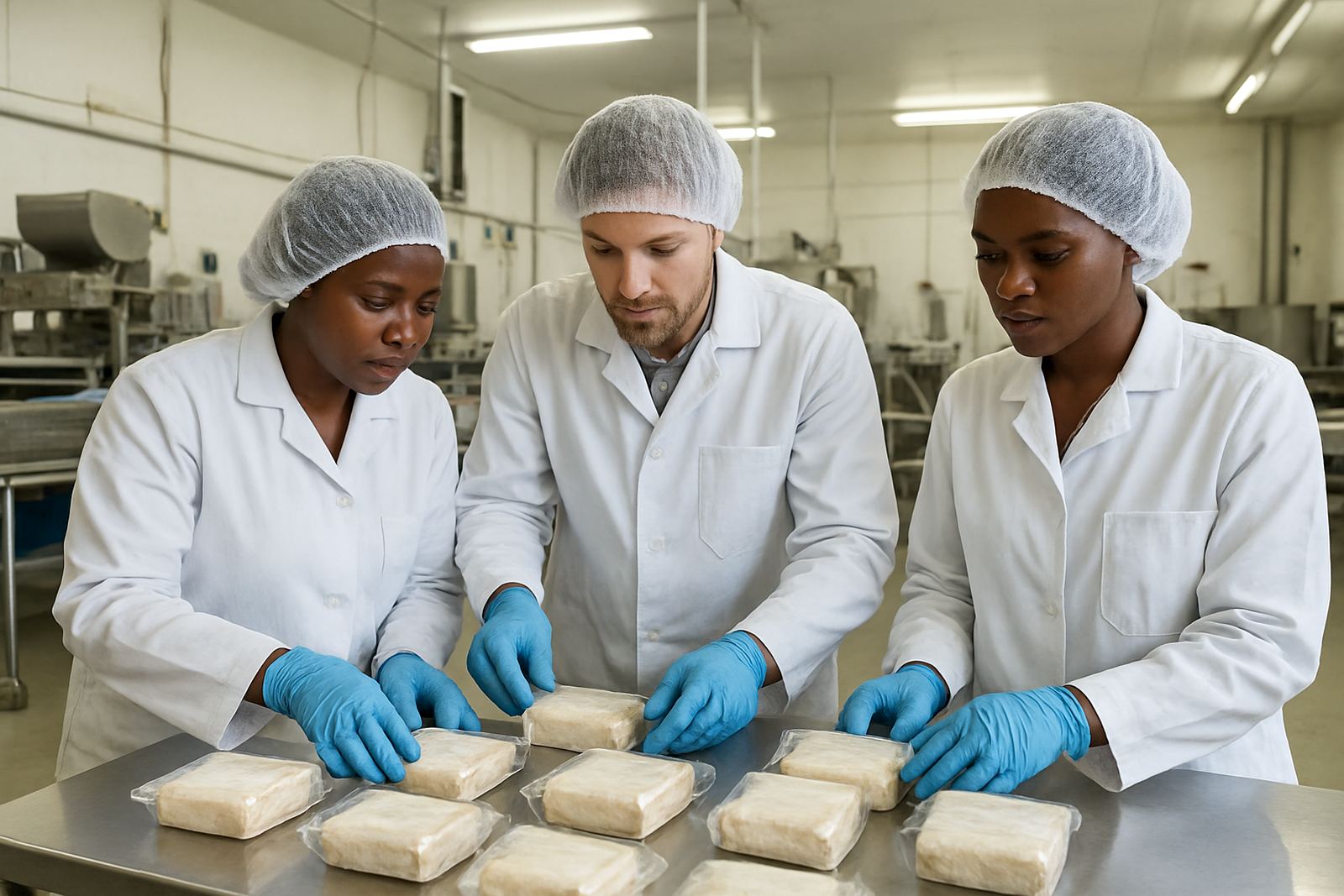


When batch control starts slipping, margins do too
Food producers often start with a mix of spreadsheets, handwritten batch logs and separate systems for sales, stock and finance. That works for a while, then one late dispatch, a missed expiry date or a wrong lot number can create returns, write-offs and awkward conversations with retailers or distributors. We help businesses in Centurion, Johannesburg, Pretoria, Durban, Cape Town and Gqeberha bring those records into one controlled process.
The usual pressure points are easy to spot: production teams record quantities on paper, the warehouse updates stock at the end of the day, and finance only sees the final invoice. By the time someone checks a batch, the trail is already split across three places. With proper ERP implementation and business-systems integration, the same batch number can follow the goods from raw materials through processing, packing, storage and delivery. That gives managers a better grip on recall readiness, stock ageing and yield losses.
For SMEs, the goal is not fancy software for the sake of it. It is a practical setup that shows what was made, when it was made, which ingredients went in, and where every carton ended up. That sort of visibility helps with municipal inspections, retailer audits and internal checks too.
Typical equipment and data points that need to speak to each other
Food producers usually have more systems on the floor than they first realise. A line can include weighing scales, barcode printers, handheld scanners, label printers, packing tables, refrigeration monitoring, and sometimes temperature probes linked to quality checks. On the admin side there may be an accounting package, a sales order system, a basic warehouse tool, and supplier spreadsheets. If those tools do not share data properly, staff end up typing the same figures twice and errors creep in.
Bizmatics designs integration around the real equipment and daily workflow. We look at what needs to be captured at receiving, during production, at packing, and at dispatch. In many cases this includes lot codes, best-before dates, unit measures, recipe or bill-of-material versions, shift numbers and reject reasons. For chilled or frozen products, it can also help to record where stock was stored and when it moved.
- Receiving and QC checks for raw ingredients
- Batch or lot creation at production start
- Barcode or label capture for cartons, bags or trays
- Warehouse stock movement and stock rotation rules
- Sales orders, dispatch notes and invoice matching
A good system keeps the information flowing without forcing the team to change every habit at once. That is important for sites with load-shedding back-up plans, shared terminals or limited network coverage on a factory floor.
Layout and planning that keeps stock moving in the right order
Layout matters more than many producers expect. If raw materials, work-in-progress and finished goods all sit too close together, stock rotation becomes messy and staff grab what is easiest rather than what should go out first. In a food environment, that can lead to expiry issues, contamination risk and poor traceability. We always start by mapping the physical flow before any system changes are made.
The best setups separate receiving, quarantine, production, packing, cold storage and dispatch as clearly as the building allows. In smaller sites, this may only mean better zone marking, fixed shelf labels and tighter scan points. In larger facilities around Durban or the Cape Town industrial areas, it may mean reworking the stock route so pallets do not criss-cross the same passage twice. Even a modest change can improve control a lot.
Planning should also cover who captures what and when. If the supervisor signs off a batch at the end of a shift, the system must allow for that. If the warehouse team only counts after 4 pm because the line runs all day, then the workflow should support that reality. Good implementation matches actual operations, not an idealised version of them. That is where many projects go wrong.
Common mistakes that lead to wasted stock and poor traceability
We often see the same avoidable problems in food producers that are growing quickly. The first is letting each department keep its own version of the truth. Sales knows one figure, production another and finance a third. The second is using product codes that are too broad, so different pack sizes or flavours are grouped together and reporting becomes unreliable. The third is failing to plan for user training, which means the new process is technically live but not properly used.
Another common mistake is trying to automate before cleaning the master data. If supplier names, units of measure, recipe versions and location codes are messy, integration will simply move the mess faster. We recommend a system audit and process mapping first, so the team can fix the basics before go-live. That includes deciding how expiry dates are recorded, how returns are handled, and which team owns adjustments after stock counts.
- Do not mix unit measures without a clear conversion rule
- Do not leave batch naming to each operator
- Do not skip stock take procedures before go-live
- Do not assume the old paper trail will disappear on day one
For SMEs in places like the East Rand or West Rand, keeping the process simple is often the difference between a system people use and one that sits half-finished. The best setup is the one the team can follow on a busy Friday afternoon, not only when there is time to spare.
Budget ranges for South African food producers
Budget depends on how many sites, users and systems need to be connected. A smaller producer with one warehouse, a simple production flow and limited integrations may spend from about R120 000 to R250 000 for implementation work, process mapping, training and initial support. A more complex operation with multiple lines, cold storage, advanced reporting and several connected systems can run from around R300 000 to R750 000 or more, depending on scope.
Some businesses prefer to phase the work. That can mean starting with ERP implementation, then adding data migration, custom reporting and workflow automation in stages. This is often the better route for food businesses that cannot afford long downtime or a major disruption during peak production weeks. Support retainers and upgrade planning are also worth budgeting for, because systems need steady maintenance once the first live cycle is complete.
For decision makers, the real question is usually not only the project cost but the cost of inaction. If stock is written off because expiry control is weak, or if a recall takes longer because records are split up, the losses can add up quickly. A well-planned system often pays back through less waste, fewer errors and better buying decisions.
How Bizmatics runs food-sector projects from Centurion
Bizmatics is based in Centurion and works with small to medium businesses across South Africa. Our team includes Oupa Mabuza, Zulfa Rhoda, Gerhard Pienaar, Mpolokeng Tshabangu, Muneeb Ismail and Thembisa Mabandla, and each project is handled with a clear role from planning through support. We focus on practical ERP implementation and business-systems integration for companies that need accurate information without unnecessary complexity.
For food producers, that usually means starting with the current process, identifying where traceability breaks down, and then defining a cleaner route for data capture and reporting. We can assist with system audits, change management, user training, upgrade planning and ongoing support retainers. If your business needs better batch control, stock rotation or traceability across multiple branches, we can shape the work around your site, your team and your production schedule.
South African food producers can start with the enquiry form on our contact page. From there, we review the current setup, discuss the pressure points and outline a sensible way forward. No two food businesses run exactly the same way, so the solution should fit the operation, not the other way round.