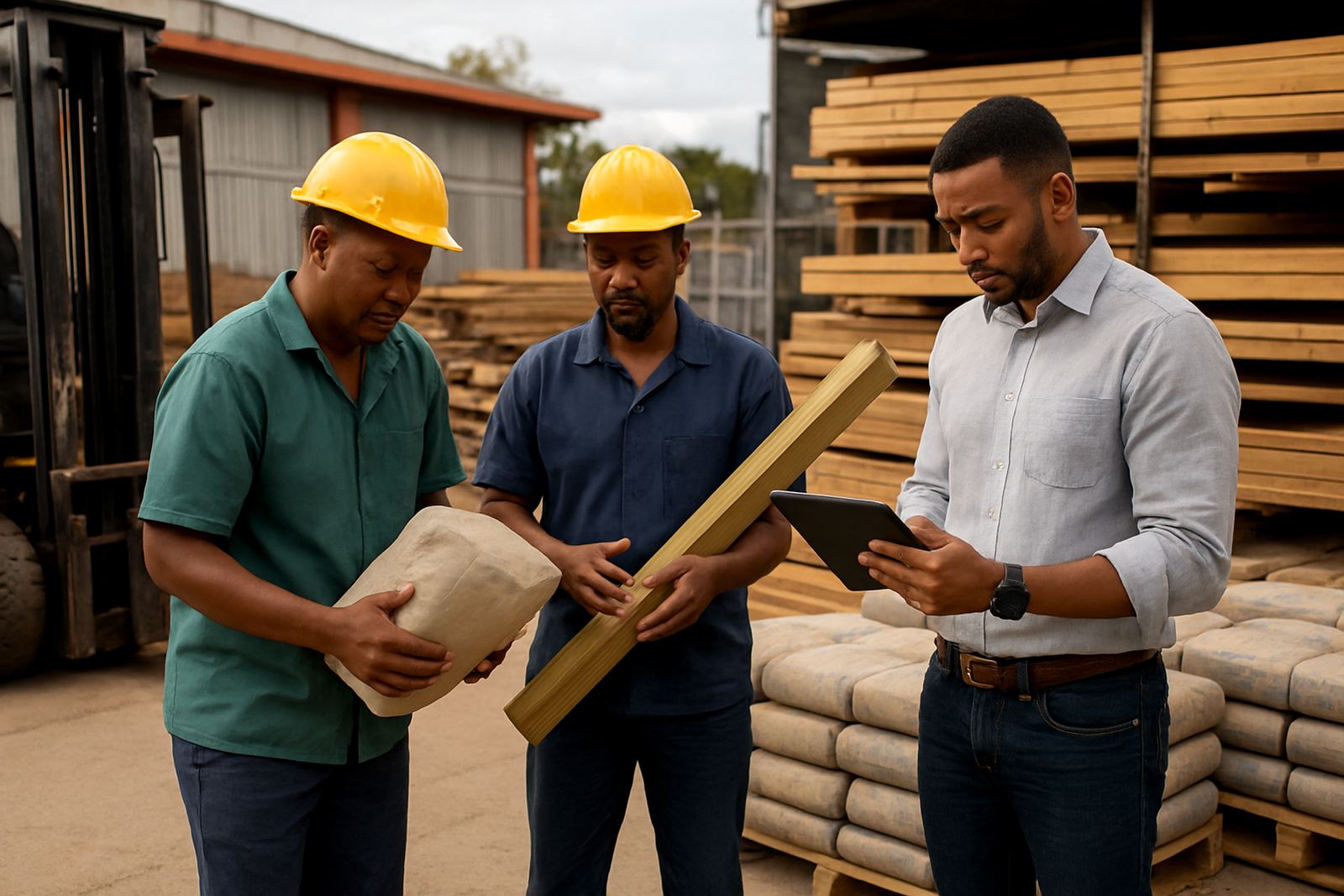




A Gqeberha production team under pressure from growth
The client is a light manufacturing business in Gqeberha supplying made-to-order and repeat items into local trade and regional distribution. Their order book was growing fast, but the old process was split across spreadsheets, manual costing notes and separate logs for raw materials, work in progress and finished stock. By month end, management were spending too much time checking numbers by hand and still not getting a clear view of margin by product line.
The brief was direct: improve production costing, link sales orders to stock and work orders, and give management better control over labour, material usage and job profitability. They also needed something the team could use during load-shedding and power interruptions, with simple screens for the factory office and a reliable way to keep data aligned across departments.
- Client type: light manufacturer
- Town: Gqeberha
- Core need: production costing and order control
- Pressure points: growing product mix, manual rework, delayed reporting
What made the implementation difficult
The main constraint was that the business had to keep producing while the system work was happening. There was no appetite for a long shutdown, and the team could not afford weeks of disrupted dispatches or stock counts. Coastal humidity also meant they needed clean stock records for packaging, consumables and materials that move quickly in a warehouse environment.
There were also practical South African realities to work around. The business needed clear approval steps, audit trails and reporting that could stand up to internal checks and municipal compliance requirements around trading records and documentation. Their existing item master was inconsistent, with some materials grouped too broadly and others split too finely, so cost rollups were not trustworthy. One of the biggest issues was that the order book was growing fast and the old process could not keep up, especially when stock moved between production and finished goods bins.
- Systems already in use: basic accounting, spreadsheets and manual production logs
- Key risk: incorrect job costing from inconsistent item setup
- Operational need: keep the factory running during rollout
How we mapped the production flow and cleaned the data
We started with process mapping across sales, procurement, production, dispatch and finance. That meant sitting with the people who actually touch the work, from the planner to the stores clerk to the person signing off completed batches. We then shaped the ERP structure around their real workflow, including work orders, material issue, labour capture and finished goods receipt.
Data migration took careful sorting. We cleaned item codes, unit measures, customer records and stock balances before moving them into the new environment. The team also needed standard naming for product families, re-order triggers and costing rules, so we set those out in a way that made sense for daily use rather than just reporting. Zulfa Rhoda led the ERP design, Gerhard Pienaar handled integration points, and Mpolokeng Tshabangu coordinated delivery so the business could review each step before sign-off.
- Process mapping across 5 core functions
- Master data clean-up for items, customers and stock
- Defined costing rules for material, labour and overheads
- Phased sign-off before each migration step
Production costing and integrations we supplied
The implementation focused on practical control. We set up production orders linked to sales demand, stock allocation for materials, and cost capture that could show actual versus planned usage. Custom reporting was added for margin checks, short pick reports and production variance summaries, giving management a clearer view without waiting for month end.
We also connected the ERP to the client’s supporting systems so information could flow without duplicate capture. That included workflow automation for approvals and a set of audit-friendly controls for changes to bills of materials and pricing. The final setup was simple enough for the shop floor and detailed enough for finance. Muneeb Ismail prepared support cover for go-live, while Thembisa Mabandla handled user training and adoption so the team could work confidently from day one.
- Production order processing
- Custom costing and variance reports
- Workflow automation for approvals
- Integration with accounting and order capture processes
- User training for office and operations staff
Timeline, rollout and go-live support
The project ran over 10 weeks from discovery to go-live. The first two weeks were spent on process mapping and data assessment. Weeks 3 to 5 covered configuration and master data clean-up. Weeks 6 and 7 focused on testing, reporting and exception handling. The last phase was training, cutover planning and live support during the first production cycle.
Go-live was staggered so the team could keep dispatching while the new production and costing controls came online. We stayed close to the client during the first weeks after launch, checking stock movements, order status and production closes each day. Small issues were handled quickly, mostly around user habits and the new approval steps, which is normal when a business moves away from manual records. Within a short time the team was using the system without needing constant help.
- Delivery period: 10 weeks
- Rollout style: phased, with live checks during first production cycle
- Support: go-live assistance and short-term adoption support
Results the client could see in the numbers
After go-live the business had a clearer view of production cost per job, more reliable stock balances and faster access to margin information. Management could see where materials were being over-issued, where batch sizes were too small, and which products carried better returns. That made it easier to price work properly and plan production around actual demand instead of guesswork.
Order handling also improved. Fewer duplicate entries meant fewer mistakes in dispatch and invoicing, and the warehouse team had better visibility of what was committed, what was in process, and what was ready for delivery. The finance team saved time on month-end checks because the numbers were coming from one controlled set of records rather than several loose files.
- Better visibility of job-level costings
- Faster month-end reconciliation
- Reduced duplicate capture
- Improved stock and WIP control
What we would do again for a similar manufacturer
If we were tackling a similar project again in Gqeberha, or in another manufacturing town such as East London, Paarl or Durban, we would still start with process mapping before configuration. That step keeps the system honest and avoids forcing the business into a process that does not match how the factory actually works.
We would also keep the rollout phased, with early data clean-up and practical training for the people who handle production records every day. In a busy plant, especially where power interruptions and tight delivery windows are part of normal trading, simplicity matters. The best result comes from getting the core order, stock and costing controls right first, then building more reporting and automation once the team is settled.
- Start with process mapping, not software screens
- Clean item and stock master data early
- Train by role, not by department only
- Use phased go-live with close support
Key facts
| Project type | ERP implementation for production costing and business-systems integration |
|---|---|
| Client sector | Light manufacturing |
| Town | Gqeberha |
| Implementation timeline | 10 weeks |
| Core modules | Production orders, stock control, costing, reporting and workflow automation |
| Support model | Training, go-live support and post-launch adoption assistance |