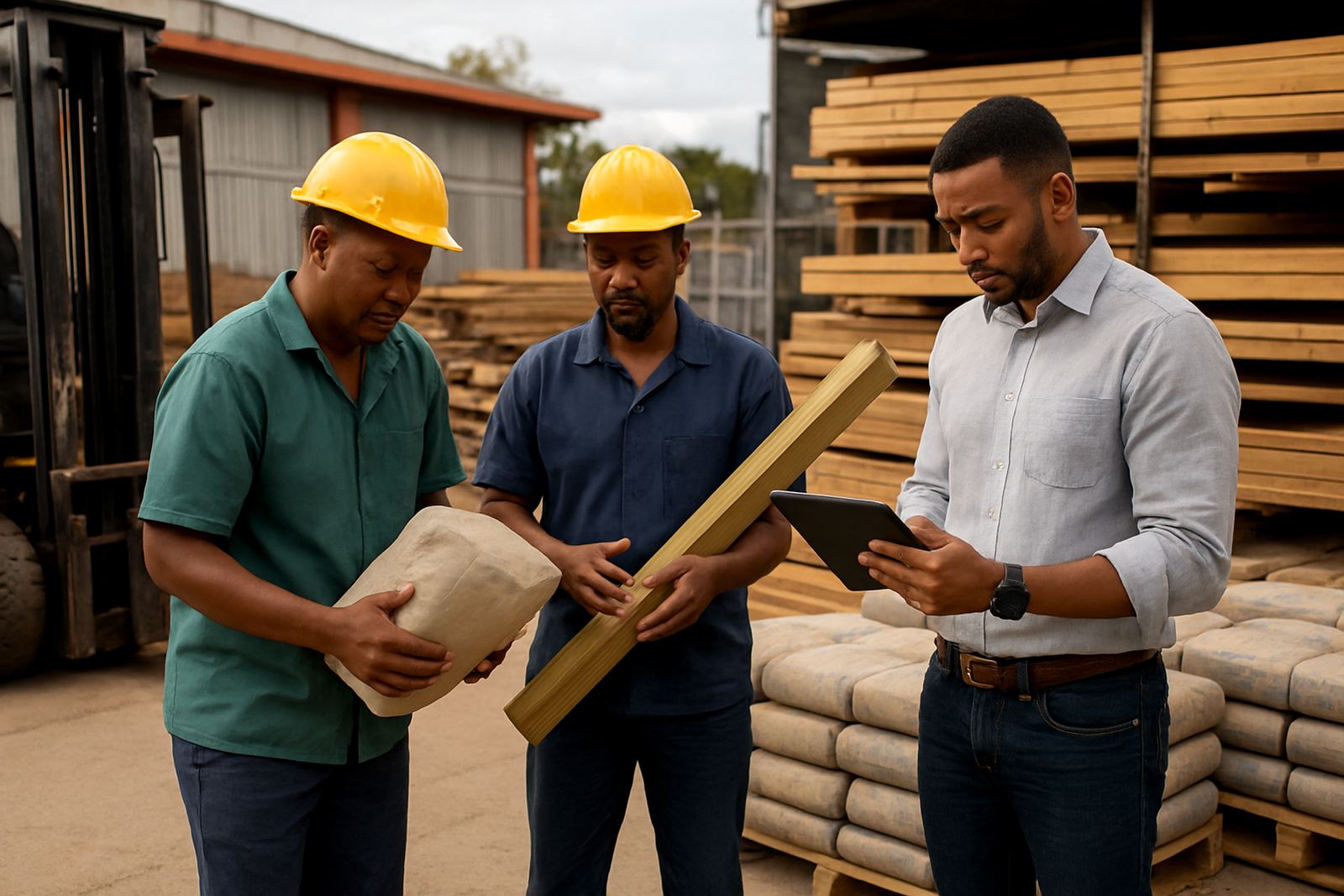




The Randburg brief: faster stock control without losing the personal touch
The client was a multi-branch parts trader in Randburg serving trade customers, walk-ins and account clients across Gauteng. Their team was dealing with duplicate stock records, price mismatches between branches and slow order processing when staff had to check availability by phone or on paper. On busy days, customers were waiting while the counter team confirmed quantities, special pricing and delivery timing. It was costing time, and a few sales were being lost because the answer took too long.
The brief was clear: build a practical stock, pricing and customer-order solution that could handle day-to-day trading at branch level while still giving management proper reporting. The owner wanted better visibility on stock on hand, reserved stock, back orders and inter-branch transfers. They also needed cleaner customer records, tighter order status tracking and a way to keep pricing consistent without forcing staff to retype the same information again and again.
What we had to work around
This was not a greenfield project. The business already had an accounting package in place, branch staff were used to their own way of working, and the stores were under pressure to keep serving customers during the change. Load-shedding also mattered because the trading floor and back office needed a process that would still hold up when power cuts disrupted normal routines. The client also wanted a solution that did not depend on one person knowing where every file was stored.
There were three key constraints. First, the branch teams could not afford long downtime. Second, the system had to fit existing barcoding and stock-count habits. Third, reporting had to be accurate enough for monthly buying decisions, but simple enough for branch supervisors to use without extra admin. We also had to allow for multiple users working at the same time, which meant strong access controls and clear approval steps for price changes and order overrides.
- Multi-branch trading with shared items, branch-level stock and transfer movements
- Customer-specific pricing and order notes for repeat trade accounts
- Fast counter processing with minimal rekeying
- Reporting that management could use for purchasing and reordering
- Stable workflows during load-shedding and reduced connectivity periods
What Bizmatics supplied
Bizmatics mapped the existing process from goods received to counter sale, special order and dispatch. From there we designed an ERP rollout with business-systems integration to join the stock, pricing and customer-order functions into one working flow. The solution was configured for the Randburg head office and its branch structure, with rules for stock availability, reserved quantities and pricing by customer category. We also set up custom reporting so that the branch manager and buying team could see movement patterns, slow stock and high-demand lines without pulling together spreadsheets by hand.
Our team included Oupa Mabuza overseeing delivery, Zulfa Rhoda on ERP configuration, Gerhard Pienaar on integration design, Mpolokeng Tshabangu managing the project plan, Muneeb Ismail leading support handover and Thembisa Mabandla handling training and adoption. The rollout was paced over 10 weeks, which gave enough time to test live scenarios and keep the branches trading. We ran process mapping sessions, data migration checks, system setup, user acceptance testing and go-live support in sequence so the team could settle into the new way of working without being overwhelmed.
- ERP implementation for stock, sales and customer order control
- Process mapping for receiving, transfers, quoting and dispatch
- Data migration for items, customers, opening balances and pricing rules
- System integration with existing accounting and stock-handling tools
- Custom reporting for branch movement, reorder points and margin checks
- User training for counter staff, store teams and supervisors
Timeline and delivery in 10 weeks
The work was completed in 10 weeks from discovery to stable go-live. Week 1 and 2 focused on mapping the current process and cleaning the source data. Week 3 and 4 covered system configuration and integration planning. Week 5 and 6 were used for migration testing and report building. Week 7 was user training, and week 8 handled acceptance testing with the branch leads. Go-live took place in week 9, with close support through week 10 for issue resolution and fine-tuning.
Because the branch teams were busy every day, we kept the work practical and short. Training sessions were run around trading hours where needed, and the support team was on hand to resolve stock setup questions, pricing exceptions and order routing issues quickly. That helped reduce disruption and gave staff confidence to use the new process instead of slipping back to manual notes or side systems.
- Discovery and process mapping: 2 weeks
- Configuration and integration design: 2 weeks
- Migration testing and reporting: 2 weeks
- Training and acceptance testing: 2 weeks
- Go-live and support stabilisation: 2 weeks
Results on the floor and at branch level
After go-live, the biggest change was speed. Counter staff could check branch stock, pricing and customer order status from one screen instead of phoning around or opening separate files. That reduced delays during peak periods and made it easier to commit to collection times with confidence. Management also gained cleaner reports on stock movement, fast-moving items and aged slow stock, which improved buying decisions and reduced guesswork.
The client also saw better discipline around process. Reserved stock was tracked properly, transfers between branches were easier to follow, and customer records were updated in a more structured way. The team reported fewer pricing disputes because the system applied the right rules more consistently. It was not about adding more admin, it was about removing repeated steps that were slowing people down. In practical terms, the business became easier to run and easier to monitor.
- Faster order processing at the counter
- Fewer stock and pricing mismatches between branches
- Better visibility of reserved stock and back orders
- Cleaner reports for purchasing and management
- Less reliance on manual follow-up and side spreadsheets
What we would do again for a similar trader
If we were doing a similar parts-trading project again, we would follow the same approach: map the live process first, keep the rollout in stages, and train the people who touch the stock every day before going live. That sequence works well for SMEs in South Africa because it respects the pace of trading while still fixing the root cause of delays. It also helps when branches are spread across Johannesburg, Pretoria, Durban, Cape Town or Gqeberha and the business needs one operating standard.
We would also push hard on early data cleanup. Good ERP work depends on clean item codes, clear customer groups and sensible pricing rules. If the data is messy at the start, the branch team carries that problem forward. This project showed that a careful setup, a realistic timeline and proper adoption support can make a major difference to a trading business without forcing it to stop and start over again.
Key facts
| Client type | Multi-branch parts trader |
|---|---|
| Town | Randburg |
| Project scope | Stock, pricing and customer-order solution |
| Timeline | 10 weeks |
| Branches covered | Head office plus multiple branch operations |
| Core services | ERP Implementation, Process Mapping, Data Migration, System Integration, Custom Reporting, User Training, Go-Live Support |